
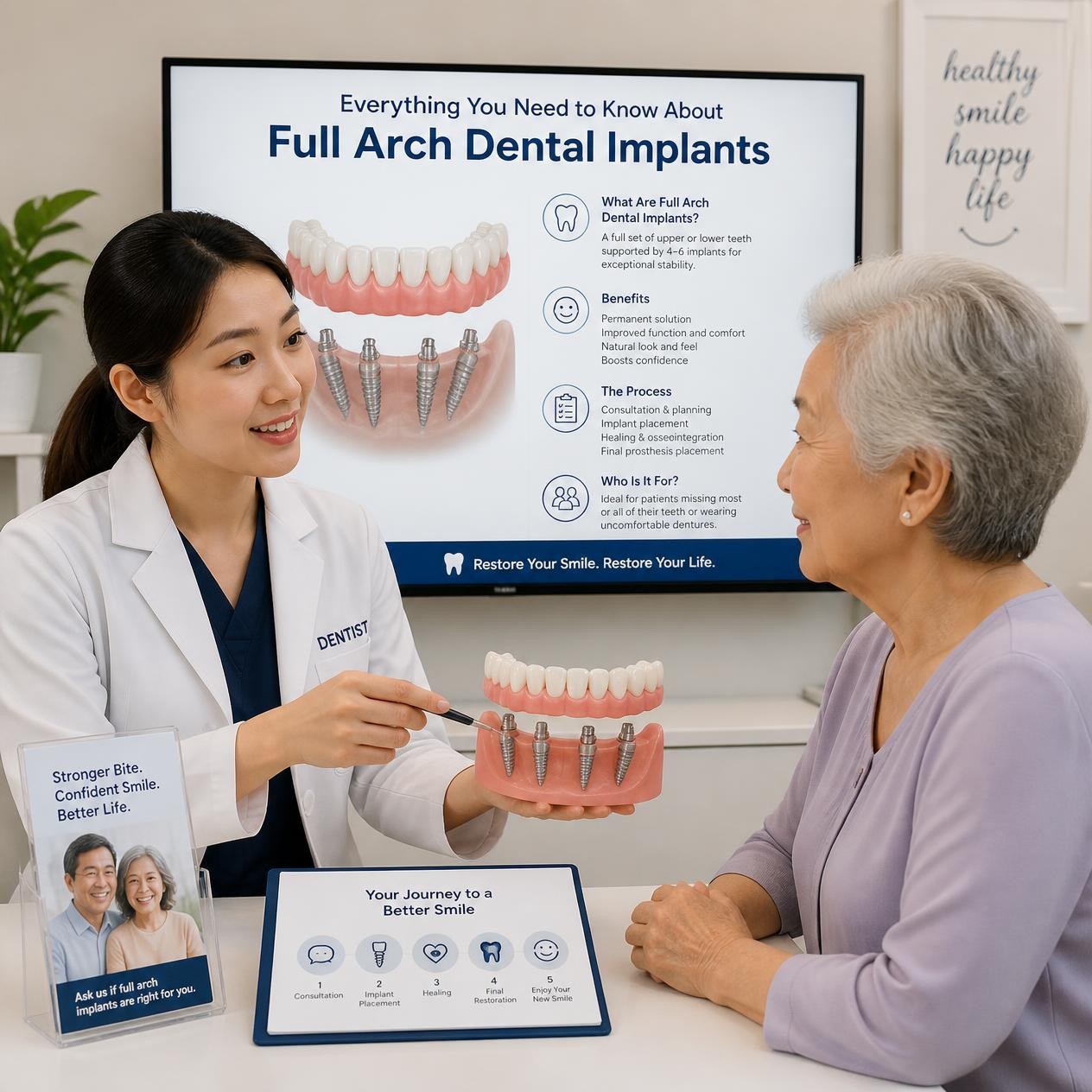
If you are living with failing teeth, severe decay, or loose dentures, the idea of replacing an entire arch of teeth can feel overwhelming. Traditional dental implants required replacing each tooth individually or undergoing months of painful bone grafting.
Modern full-arch implant protocols, commonly known as All-on-4 or ProArch dental implants, have revolutionised dentistry.
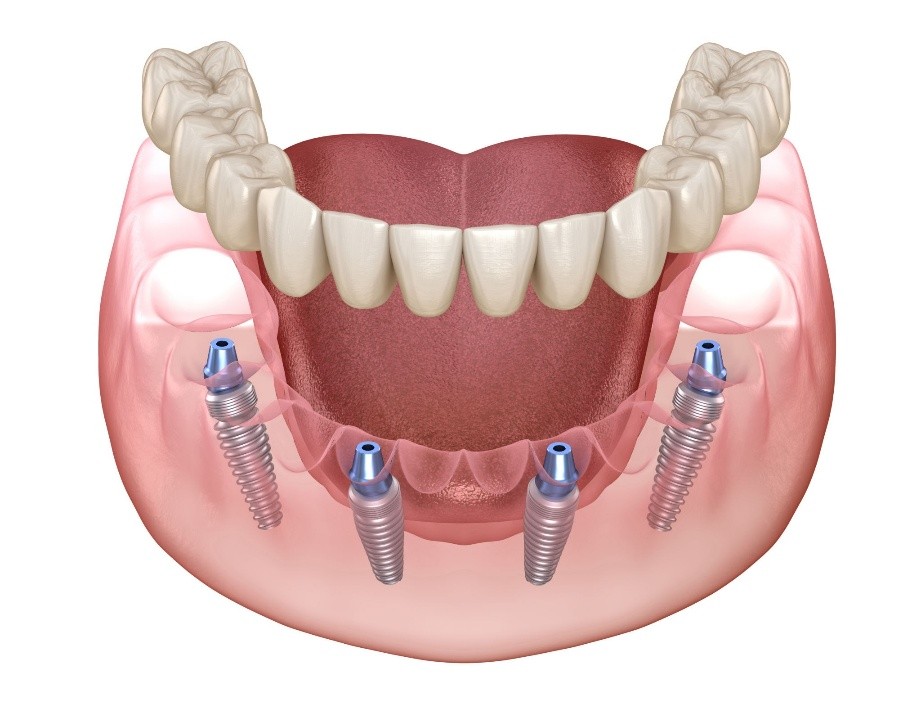
What Are All-on-4 or ProArch Dental Implants?
Both All-on-4 and ProArch are treatment approaches designed to replace an entire arch of missing teeth using a fixed bridge supported by dental implants. While the branding and treatment protocols may differ, both are based on the same core concept of full-arch implant rehabilitation.
Instead of relying on 8 to 10 implants, this treatment approach uses 4 to 6 strategically placed titanium implants anchored in areas of optimal bone density. A natural-looking, custom-crafted full-arch bridge is then securely fixed to these implants, providing a stable and long-lasting solution that looks, feels, and functions like natural teeth.
Major Benefits for Patients
- “Teeth-in-a-day” convenience: In many cases, a fixed temporary bridge can be attached to the implants on the day of surgery, enabling patients to leave the clinic with a functional and aesthetically pleasing smile while the implants heal.
- Permanent and fixed restoration: One of the greatest advantages of implant-supported teeth is that they are fixed securely in place. There are no adhesives, no removal for cleaning, and no soaking overnight. Patients can enjoy greater comfort, confidence, and peace of mind knowing their teeth remain stable while eating, speaking, and smiling.
- Prevents facial collapse: When teeth are lost, the jawbone can gradually shrink due to a lack of stimulation. Dental implants help address this by acting like artificial tooth roots, supporting healthy bone maintenance and helping to preserve the natural shape of the face over time.
What to Expect: Step-by-Step Patient Journey
Step 1: 3D scan and digital planning
During consultation, your dentist uses 3D Cone Beam Computed Tomography (CBCT) scanning and intraoral scanners to map your jawbone, nerves, and facial anatomy in full 3D.
Step 2: Surgery and temporary teeth
Under local anaesthesia or sedation, any remaining failing teeth may be carefully removed, and the dental implants strategically placed into the jawbone. In suitable cases, a fixed provisional bridge can be attached to the implants on the same day, allowing patients to leave the clinic with a functional, natural-looking smile while the implants heal and integrate with the bone.
Step 3: Healing and osseointegration
While you continue to enjoy your temporary fixed teeth, the titanium implants slowly fuse with your jawbone in a process called osseointegration. This creates the strong, stable foundation needed for your final restoration. During this period (around 3 to 6 months), a soft-food diet is usually recommended to allow the implants to heal undisturbed and achieve optimal long-term results.
Step 4: Final restoration placement
After the implants have fully healed and integrated with the jawbone, your temporary bridge is replaced with a permanent, custom-made restoration. Crafted from durable, high-quality materials such as zirconia or titanium-reinforced acrylic, the final bridge is designed to look natural, withstand everyday function, and provide a confident smile for years to come.
Who is Suitable for All-on-4 or ProArch Dental Implants?
You may be a suitable candidate for All-on-4 or ProArch Dental Implants if you:
- Are missing most or all the teeth in one or both jaws and are seeking a fixed, long-term tooth replacement solution.
- Have advanced gum disease, extensive tooth decay, or severely damaged teeth that are no longer predictable to maintain.
- Wear loose, uncomfortable, or unstable dentures and would prefer a more secure and permanent alternative.
- Want to regain confidence in eating, speaking, and smiling without the worry of dentures shifting or slipping.
- Have sufficient jawbone to support dental implants or are suitable for treatment approaches designed to maximise the use of available bone.
- Are in generally good health and able to undergo routine dental implant procedures.
- Are committed to maintaining good oral hygiene and attending regular follow-up appointments to support the long-term success of the implants.
The best way to determine your suitability is through a comprehensive consultation, which typically includes a clinical examination, a review of your medical history, and a CBCT scan to assess your bone structure and treatment options.
Consult Dontia Implants today!
